

A few simple things the night before a race to help your body feel lighter, looser, and more ready to run.
What if you could do a few simple things the night before a race to help your body feel lighter, looser, and more ready to run?
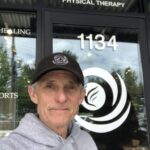
I’m Ralph Havens, a physical therapist at
Beyond Limits Physical Therapy in Fairhaven, Washington.
I work with runners and athletes to help optimize movement, address restrictions, and improve running form.
I also work with my son, who is a freshman in high school and a runner.
Over time, I’ve developed simple techniques that we use to help optimize movement. Some are hands-on techniques that I perform with athletes. But there are also techniques that a runner can learn and do for themselves.
That’s what this post is about.
When You Don’t Have Your Physical Therapist With You Pre-Race…
The night before a race, you may be traveling, staying in a hotel, at a championship meet, or simply at home.
Your physical therapist or manual therapist may not be there.
So I’ve created a series of very simple 90-second techniques that runners can learn and use themselves.
You don’t need a complicated routine.
You don’t need special equipment.
And you don’t need to spend an hour stretching.
Put the TV on. Have a clock or timer where you can see it. Do one technique for about 90 seconds, then simply test how you feel.
Walk.
Jog.
Do a few strides.
Notice your movement.
The 90-Second Techniques
I’ve created videos for several different areas. Look at the end of this post for the techniques.
- Achilles
- Plantar fascia
- Calf
- Hamstring
- Tongue
- Thumb and arm swing
Each one is designed to be simple enough for a runner to follow along with.
Try one technique for approximately 90 seconds.
Then test yourself.
Does your ankle feel different?
Does your calf feel looser?
Does your stride feel easier?
Do you feel lighter or more bouncy?
Does your hamstring move more freely?
Does your arm swing feel easier?
You don’t have to believe me. Test it yourself.
The Goal Is to Feel Light and Bouncy
Before a race, we’re not trying to exhaust the body.
We’re not looking for a hard workout.
We’re looking for ways to help you feel
mobile, coordinated, light, and ready to run.
Sometimes a very small change in how one part of the body moves can change what you feel somewhere else.
That’s one of the things that fascinates me about working with runners.
The body is connected.
What About the Tongue?
One of the techniques I’m sharing may seem unusual.
It’s a simple tongue exercise.
Why would a runner work with their tongue?
Because the tongue is connected into broader movement relationships in the body. In my work, I’ve found that working with these relationships can sometimes influence movement through the pelvis and ankles.
Again, don’t take my word for it.
Try it for 90 seconds.
Then stand up and test your movement.
What About the Thumb?
Another simple technique uses the thumb.
This is something I use when looking at the relationship between the hand, arm and running mechanics.
The goal is to explore whether releasing tension and changing movement through the thumb can influence the freedom of the arm swing.
It’s another quick experiment.
Try it.
Then run.
Notice what you feel.
Use Your Body as Your Laboratory
This is probably the most important thing I want runners to understand.
Test. Don’t just assume.
Try a technique.
Notice how you feel before.
Do the technique.
Then test again.
You might notice a change.
You might not.
That’s okay.
Your body is giving you information.
Over time, you can learn which techniques seem useful for you.
And Then There’s the Hands-On Work
The techniques in these videos are simple self-care tools.
The hands-on work I do with athletes is different.
When I’m working directly with a runner, I can assess movement and use much more specific and intricate manual techniques based on what I’m seeing and feeling.
That’s where individualized work can become particularly interesting.
But you aren’t always going to have your physical therapist with you.
So I want runners to have some tools they can use themselves.
Watch the Videos Below
I’ve put the videos below so you can simply follow along.
Try the Achilles Technique
Try the Plantar Fascia Technique
Try the Calf Gastroc/Soleus Technique
Try the Hamstring Technique
Try the Tongue Technique
Try the Thumb Technique
Give each one about 90 seconds and then test how you feel.
See the Running Form Comparison
At the bottom, I’ve included a longer video showing how I use these approaches to work on running form, including side-by-side comparisons so you can actually see changes in movement.
Pre-Run Drills
And here are our Pre-Run Drills you can use before you run.
Share This With Your Running Friends
If you find one of these techniques interesting, share it.
Send it to your teammate.
Send it to your coach.
Send it to your son or daughter.
Send it to the runner who’s always trying to find another way to improve.
You never know when a simple technique might give someone another piece of the puzzle.
Try it. Test it. See what you notice.
About Ralph Havens, PT IMTC
Ralph Havens, PT IMTC
Beyond Limits Physical Therapy
Fairhaven / Bellingham, Washington
1134 10th Street
Bellingham, WA 98225
360.599.2217


Recent Comments